

Modalità suggerimenti è attiva Disattiva

Prova di 7-giorni Accesso demo

  • Ottieni accesso a tutto il nostro database
  • Fai Screening come un vero professionista
  • Monitora tutti i tuoi titoli quotidianamente
  • Traccia i prezzi dei bond da oltre 400 fonti
  • Prendi decisioni ponderate, basate su dati accurati e completi

Filtra i bond in base a +50 criteri (rating, rendimento, prezzo, ecc.)

Ottieni l'accesso

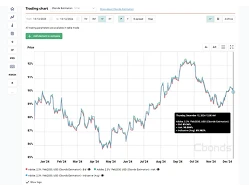
Slovenia Government Bond Yield Curve

Numero massimo di curve da aggiungere al grafico -

Nessun dato per creare una tabella

Slovenia yield curve is a graphical representation of interest rates on Slovenian government bonds across different maturities. This benchmark helps compare sovereign bond yields across different maturities and evaluate changes in interest rate levels. The curve includes 10 tenors ranging from 1 year to 25 years. Values are published on each business day for the previous trading day.

FAQ

  • How should different yield curve shapes be interpreted in the context of economic expectations?

    The shape of the yield curve is a key indicator of market expectations for future economic growth and monetary policy. Four main configurations are generally distinguished:
    • A normal curve signals expectations of sustained GDP growth, moderate inflation, and a neutral or more accommodative central-bank stance in the future. Long-term rates exceed short-term rates because investors demand a risk premium for holding longer-dated assets.
    • An inverted curve is a classic leading indicator of recession: the market prices in aggressive future cuts to the policy rate in response to an expected economic slowdown or crisis, causing short-term rates to rise above long-term rates.
    • A flat curve indicates uncertainty or a transition between expansion and contraction, or expectations that the central bank will pause after a rate-hiking cycle. The spread between long- and short-term rates becomes minimal.
    • A humped curve indicates expectations of temporary policy tightening or a medium-term inflation surge, followed by a return to lower rates and greater stability over the long term. Rates in the middle segment exceed those at both the short and long ends of the yield curve.
  • Which spreads between curve tenors best reflect macroeconomic expectations in Slovenia?

    For accurate inflation forecasting, bond maturities should correspond to the forecast horizon; the 5Y–1Y spread is a standard example. For assessing real economic activity, the spread between the longest and shortest available tenors generally performs best, with the 10Y–2Y spread serving as the standard benchmark. The high correlation among broad spreads means that one can usually be used in place of another without materially reducing forecast quality.
  • What are the key characteristics of the short and long ends of the curve within its available tenor range?

    The curve spans 1 year to 25 years and includes 10 points in total.
    - The 1–7-year segment indicates expectations for future GDP growth and inflation.
    - The 7–25-year segment is shaped by inflation expectations and the risk premium. Yields beyond 10 years reflect investors’ expectations regarding the macroeconomic stability of Slovenia.
  • When are the new Slovenia yield curve values published?

    Curve values are published on each business day for the previous trading day. For example, data for 6 May 2026 are published on 7 May 2026.

I dati sulle curve presenti nella pagina sono disponibili per gli ultimi 3 anni — l'accesso a dati aggiuntivi è disponibile tramite l'API Cbn-data


Contacts

Accesso ai dati
La registrazione è richiesta per ottenere l'accesso.